Call centres are under constant pressure to do more with less: higher customer expectations, growing interaction volumes, and tight cost controls. Call centre AI solutions are changing the game by automating routine tasks, guiding agents in real time, and delivering faster, more personalized support at scale. For businesses looking to navigate the digital era, the Talk Business guide to omnichannel AI support offers insights on integrating AI across channels, while transforming customer service with AI-driven call centers highlights how virtual agents can redefine self-service experiences.
This guide walks through what call centre AI is, how it works, and the concrete business benefits it can bring to your organisation. You will also find practical tips for implementation, adoption, and measuring success.
Today , leveraging advanced computing infrastructure can make all the difference. Many businesses are exploring flash mob computing - large-scale processing to handle spikes in customer interactions efficiently. This approach allows call centres to scale dynamically without compromising service quality, especially when combined with AI-driven workflows.
For organizations looking for high-performance computational tools, supercomputer systems - AI research can dramatically improve predictive analytics and agent guidance. By integrating these systems with call centre AI platforms, teams can anticipate customer needs and deliver personalized responses faster.
Marketing strategies also play a crucial role in how AI-powered call centres engage with customers. Companies that adopt data-driven marketing strategies - enhanced customer retention can ensure that AI insights are actionable and aligned with overall business goals. Implementing these strategies alongside AI solutions helps in optimizing every touchpoint in the customer journey.
Additionally, businesses can benefit from advanced marketing automation tools - omnichannel engagement, which allow call centres to orchestrate campaigns across multiple channels while AI systems monitor real-time interactions. These integrations reduce manual effort, maintain consistency, and enhance customer satisfaction.
Financial planning and resource allocation are often overlooked but critical components. Leveraging top financial resources - AI technology investments can help organizations prioritize initiatives, measure ROI, and ensure sustainable AI adoption. When paired with call centre AI solutions, this strategic approach ensures both operational efficiency and measurable business impact.
By combining intelligent systems, high-performance computing, and strategic marketing approaches, modern call centres are not only meeting but exceeding customer expectations. The right combination of technology and strategy empowers teams to deliver seamless support experiences at scale while keeping costs under control.
Top 10 Call Centre AI Solutions for Modern Customer Service
In the era of digital customer support, businesses are increasingly adopting call centre AI solutions to enhance efficiency, automate routine tasks, and provide personalized service at scale. Below is a list of top platforms helping organizations transform their contact centers with AI-driven tools.
1. Bright Pattern – AI Contact Center Solutions
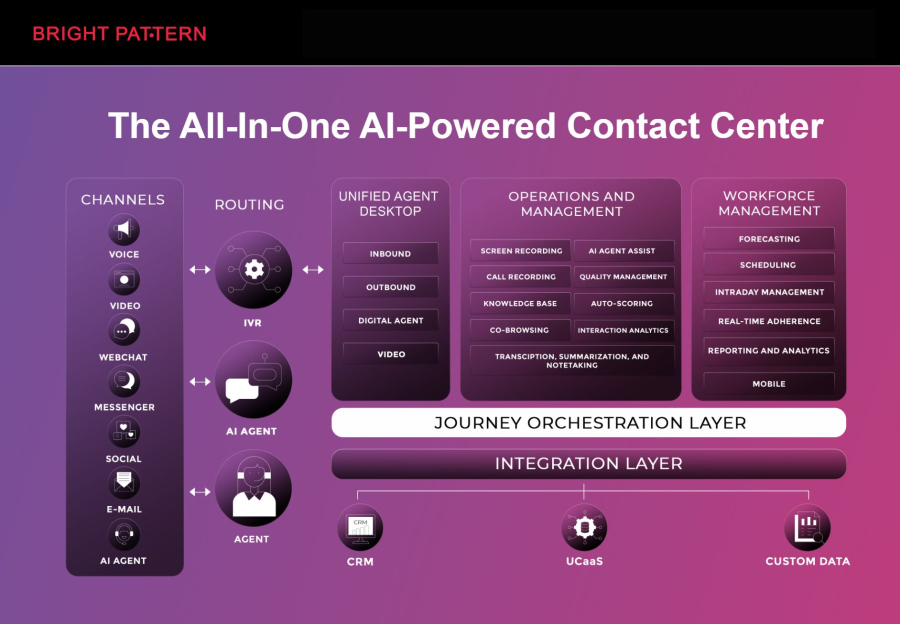
Bright Pattern stands out as a leading provider of AI-powered contact center solutions, helping organizations deliver seamless customer experiences across multiple channels. Their platform integrates advanced AI features with intuitive agent tools to improve productivity, reduce response times, and drive customer satisfaction.
Key features include:
- AI-assisted agent guidance for real-time support
- Omnichannel routing to handle calls, chat, email, and social messages
- Predictive analytics to anticipate customer needs
- Virtual agent technology for automated self-service
- Customizable dashboards for performance tracking
Bright Pattern’s solutions are designed to scale with business needs, making it ideal for enterprises looking for robust call centre AI solutions that combine automation with human-like interaction.

2. Genesys Cloud CX
Genesys Cloud CX provides AI-powered automation and analytics tools for contact centers, helping teams manage high volumes of interactions while maintaining personalized service.
3. Five9 Intelligent Cloud Contact Center
Five9 offers cloud-based contact center software with AI-driven routing, analytics, and virtual agent capabilities to enhance efficiency and customer experience.
4. Talkdesk CX Cloud
Talkdesk combines AI and automation to improve agent performance, streamline workflows, and deliver actionable insights across voice, chat, and messaging channels.
5. NICE inContact CXone
CXone by NICE inContact integrates AI, workforce optimization, and analytics to deliver scalable solutions for enterprise contact centers.
6. Avaya OneCloud CCaaS
Avaya OneCloud uses AI to optimize routing, empower agents, and improve self-service options across multiple communication channels.
7. Cisco Contact Center AI
Cisco’s AI-driven contact center platform enhances agent productivity and provides intelligent automation for better customer engagement.
8. 8x8 Contact Center
8x8 combines AI and cloud technology to offer analytics, omnichannel support, and automated customer interactions for small and medium businesses.
9. RingCentral Contact Center
RingCentral leverages AI for predictive routing, intelligent automation, and seamless omnichannel communication.
10. Zendesk Suite
Zendesk provides AI-enabled support tools that help agents resolve tickets faster, improve customer satisfaction, and deliver insights for continuous improvement.
What Are Call Centre AI Solutions?
Call centre AI solutionsare a set of tools that use artificial intelligence to handle or assist customer interactions across channels such as voice, chat, email, and messaging. These solutions can understand natural language, automate tasks, surface insights, and support human agents with recommendations and workflows.
Instead of replacing agents, well designed AI solutionsaugment your teamby taking over repetitive, low value tasks and giving agents more time and context to handle complex, high value conversations.
Core Capabilities of Call Centre AI
- Natural language understanding (NLU)to interpret what customers are saying or typing in their own words.
- Speech recognitionto convert spoken language into text and trigger actions in real time.
- Conversational automationvia virtual agents or chatbots that can resolve common inquiries end to end.
- Agent assistancetools that provide real time suggestions, next best actions, and knowledge snippets.
- Decisioningengines that apply business rules and machine learning to route, prioritise, and personalise interactions.
- Analytics and insightsthat transform huge volumes of call data into clear, actionable intelligence.
Key Types of Call Centre AI Solutions
Call centre AI is not a single product; it is a portfolio of capabilities that can be combined. Here are the most common solution types and what they deliver.
1. AI Powered Virtual Agents and Chatbots
Virtual agents use conversational AI to interact with customers through voice or text. They can understand intent, answer questions, complete transactions, and hand off to human agents when needed.
- Voice virtual agentsautomate parts of the IVR experience or entire call flows.
- Chatbotssupport customers on web chat, mobile apps, and messaging channels.
Business benefits:
- Deflect a large portion of repetitive calls and chats.
- Offer 24 / 7 self service without staffing night shifts.
- Give customers instant responses and faster resolutions.
2. AI Assisted Routing and Triage
AI enhanced routing engines analyse the customer request, sentiment, and context, then direct the interaction to thebest possible resourcein real time.
- Intent based routingsends customers to agents with the right skills and knowledge.
- Value based routingprioritises high value customers or urgent issues.
- Load balancingsmooths traffic across teams and channels.
Business benefits:
- Higher first contact resolution.
- More efficient use of specialist teams.
- Reduced transfers, holds, and customer frustration.
3. Real Time Agent Assistance
Agent assist tools act as a digital co pilot for agents during live interactions. They listen to or read the conversation and surface the information the agent needs in the moment.
- Suggested responsesfor common questions.
- Knowledge base snippetsthat match the current topic.
- Real time guidanceto ensure compliance, empathy, and best practice scripts.
- Automated note takingand after call summaries.
Business benefits:
- Shorter average handle time without sacrificing quality.
- Faster onboarding of new agents.
- Consistent, compliant messaging across the team.
- Higher agent confidence and engagement.
4. AI Analytics and Quality Management
AI powered analytics turn every call, chat, and message into structured data you can search, measure, and improve.
- Speech and text analyticscapture themes, intents, and reasons for contact.
- Sentiment analysismeasures customer emotion across interactions.
- Automated quality monitoringflags coaching opportunities and celebrates success.
Business benefits:
- Visibility into what customers really experience and need.
- Faster identification of product, process, or policy issues.
- Data driven coaching that raises overall performance.
Benefits of Call Centre AI Solutions
When implemented thoughtfully, call centre AI delivers benefits across customer experience, operations, agents, and the broader business.
1. Better Customer Experience
- Shorter wait times.Virtual agents and smarter routing reduce queues and speed up access to help.
- Faster resolution.AI can instantly retrieve account details, previous contacts, and relevant knowledge, meaning customers do not repeat themselves.
- 24 / 7 availability.Customers can get support whenever they choose, not just during office hours.
- Personalised journeys.AI uses context to tailor responses, offers, and next steps.
2. Greater Operational Efficiency
- Automation of repetitive tasks.Password resets, order tracking, appointment changes, and similar workflows can be handled end to end by AI.
- Optimised workforce.With AI handling routine volume, human agents focus on higher value work, so you can handle more contacts with the same or fewer resources.
- Improved forecasting.AI analytics help you understand patterns and peaks, so you can plan staffing more accurately.
3. Happier, More Effective Agents
- Less repetitive work.Agents spend more time on meaningful problem solving and relationship building.
- Stronger support during calls.Real time guidance reduces stress and removes guesswork.
- Faster training.New hires reach proficiency sooner with AI supported workflows and suggestions.
- Clear feedback.AI driven quality insights show agents exactly where they excel and where they can grow.
4. Strategic Business Impact
- Higher customer lifetime value.Better experiences and faster resolutions drive loyalty, retention, and up sell opportunities.
- Insight for the whole organisation.Call centre conversations reveal product gaps, process friction, and emerging trends that can guide strategy.
- Scalable growth.As volumes rise, AI lets you scale support without linear increases in headcount and cost.
Traditional vs AI Enhanced Call Centres
The table below highlights how AI changes typical call centre outcomes.
| Area | Traditional Call Centre | AI Enhanced Call Centre |
| Customer access | Limited hours, long wait times during peaks | 24 / 7 self service, dynamic load balancing |
| First contact resolution | Dependent on agent knowledge and routing rules | Intent based routing and real time guidance raise FCR |
| Agent experience | Manual note taking, high cognitive load | Automated summaries, co pilot style support |
| Quality monitoring | Sampled calls, delayed feedback | Near real time analysis across 100 % of interactions |
| Scalability | Headcount must grow with volume | Automation absorbs repetitive volume, stable headcount |
High Value Use Cases for Call Centre AI
You can start small with targeted use cases that deliver quick wins and build momentum. Here are some proven areas where AI delivers strong returns.
1. Self Service for Common Requests
- Order and delivery status.
- Billing balances, payment due dates, and simple disputes.
- Appointment booking and rescheduling.
- Account updates and password resets.
Automating these journeys with virtual agents and chatbots frees human agents for higher complexity conversations.
2. Real Time Guidance in Regulated Industries
In sectors such as finance, healthcare, and utilities, compliance is critical. AI can support agents by:
- Highlighting required disclosures or scripts during the call.
- Flagging potential risk language or missing statements.
- Auto generating call notes that align with regulatory standards.
The result is stronger regulatory adherence with less manual oversight.
3. Proactive Outreach and Retention
AI models can identify customers at risk of churn or those most likely to respond to specific offers. Combined with outbound call or messaging campaigns, this unlocks:
- Targeted retention programs with tailored messages.
- Proactive service, such as notifying customers of issues before they call.
- Up sell and cross sell opportunities that genuinely match customer needs.
4. Continuous Voice of the Customer Insights
By analysing every interaction, AI helps you understand:
- Top reasons for contact and how they change over time.
- Sentiment trends by product, process, or customer segment.
- Which policies drive repeat calls or negative experiences.
This continuous feedback loop supports faster decisions, better products, and stronger customer relationships.
How to Implement Call Centre AI Successfully
Successful AI adoption is about more than technology. It involves strategy, people, process, and data. The steps below provide a practical roadmap.
Step 1: Clarify Business Objectives
Start with clear, measurable goals such as:
- Reducing average handle time by a specific percentage.
- Increasing first contact resolution.
- Deflecting a target percentage of contacts to self service.
- Improving customer satisfaction or net promoter scores.
These objectives will guide solution selection, design, and success measurement.
Step 2: Map Customer Journeys and Processes
Review your current journeys and identify:
- High volume, low complexity interactions that are ideal for automation.
- Pain points where customers experience long waits or repeated transfers.
- Manual steps that could be streamlined with AI or integration.
This mapping ensures AI is applied where it delivers real value, not just where it is technically possible.
Step 3: Prioritise Use Cases
Rank potential AI use cases by impact and ease of implementation. Early candidates often include:
- Virtual agents for simple, repetitive tasks.
- Real time agent assist for one or two high volume call types.
- Speech and text analytics to gain visibility across interactions.
Delivering quick wins builds internal support and funding for broader transformation.
Step 4: Prepare Data and Integrations
AI needs access to accurate, timely data to be effective. Work with IT and data teams to:
- Connect AI tools to CRM, ticketing, billing, and knowledge systems.
- Define data governance, including privacy and security controls.
- Ensure that training data for AI models is representative and up to date.
Step 5: Involve Agents Early
Agents are central to AI success. Engage them from the outset by:
- Explaining how AI will support, not replace, their roles.
- Inviting feedback on where automation would help most.
- Including experienced agents in testing and tuning.
When agents see AI as their ally, adoption and performance both rise.
Step 6: Pilot, Learn, and Scale
Launch controlled pilots before full scale rollout. During pilots:
- Monitor performance metrics and user feedback closely.
- Tune conversation flows, knowledge content, and routing rules.
- Document lessons learned and refine your implementation plan.
Once results are proven, expand to additional use cases, teams, or regions.
Measuring the Impact of Call Centre AI
To demonstrate value and keep investments aligned with business goals, track metrics across customer, operational, and financial dimensions.
Customer Experience Metrics
- Customer satisfaction or post interaction survey scores.
- Net promoter score, where applicable.
- First contact resolution rate.
- Average speed of answer and total time to resolution.
Operational Metrics
- Average handle time and call duration.
- Self service containment or deflection rate.
- Transfer rates between agents or departments.
- Agent occupancy and productivity indicators.
Financial and Strategic Metrics
- Cost per contact before and after AI deployment.
- Incremental revenue from up sell, cross sell, or retention efforts.
- Reduction in compliance issues or risk events.
- Time saved in reporting and analysis thanks to AI analytics.
Choosing the Right Call Centre AI Partner
The right technology partner will accelerate your success and reduce risk. When evaluating vendors or platforms, consider the following.
Functional Fit
- Coverage of priority use cases such as virtual agents, agent assist, and analytics.
- Support for your key channels: voice, email, chat, messaging, and social.
- Compatibility with your current contact centre infrastructure.
Ease of Integration
- Pre built connectors to your CRM and other core systems.
- APIs and data models that align with your architecture.
- Flexible deployment models that fit your security and compliance needs.
AI Quality and Control
- Strong natural language understanding and speech recognition performance.
- Tools for training, testing, and continuously improving AI models.
- Transparent controls to manage tone, policies, and risk.
Support, Training, and Governance
- Implementation and change management support.
- Training for supervisors, agents, and administrators.
- Ongoing success management and roadmap collaboration.
Future Trends in Call Centre AI
Call centre AI continues to evolve rapidly. Looking ahead, organisations can expect even more powerful capabilities, including:
- More human like conversationsas language models become more capable and easier to tune for brand voice and policy.
- Deeper integrationacross marketing, sales, and service, creating a unified view of the customer and more seamless experiences.
- Proactive, predictive supportwhere AI anticipates needs before customers reach out.
- Richer agent co pilotsthat not only suggest content but also orchestrate workflows end to end.
Organisations that invest early and build AI capabilities thoughtfully will be best positioned to benefit from these advances.
Putting Call Centre AI Solutions to Work
Call centre AI solutions are no longer experimental. They are proven, practical tools that can transform customer service from a cost centre into a strategic engine for loyalty and growth.
By starting with clear goals, selecting high impact use cases, involving agents, and measuring results, you can quickly unlock:
- Faster, more convenient support for your customers.
- More efficient, scalable operations for your business.
- A more rewarding, lower stress environment for your agents.
The organisations that thrive will be those that combine the empathy and judgment of human agents with the speed, consistency, and insight of AI. Now is the time to explore where call centre AI can create the greatest value for your customers and your team.
